INTRODUCTION
Most people use ChatGPT wrong.
They type something vague like “write me a blog post” or “help me with marketing” and then wonder why the output sounds robotic, generic, or completely useless. They blame the AI. They say it doesn’t work.
But here’s the truth: ChatGPT is only as powerful as the prompt you give it.
The right prompt transforms ChatGPT from a mediocre text generator into a world-class writing partner, marketing strategist, business consultant, coding assistant, and creative collaborator — all in one.
The wrong prompt? You get garbage.
After testing thousands of prompts across dozens of use cases, we’ve compiled the 100 best ChatGPT prompts that actually deliver exceptional results in 2026. Every single prompt in this list has been tested, refined, and optimized to give you outputs that feel like they came from a human expert — not a machine.
Here’s what you’ll get in this guide:
- ✅ 100 copy-paste ready prompts organized across 8 categories
- ✅ The SPARK Framework for writing your own killer prompts
- ✅ 5 advanced prompt engineering techniques the pros use
- ✅ Common mistakes that ruin your ChatGPT results
- ✅ Pro tips sprinkled throughout every section
Whether you’re a writer, marketer, business owner, student, developer, or just someone who wants to get more from AI — this is the only prompt list you’ll ever need.
Let’s dive in.
Why Great ChatGPT Prompts Matter in 2026 {#why-great-prompts-matter}
ChatGPT now has over 300 million weekly active users worldwide.
Businesses save an estimated $75 billion annually using AI assistants. And yet, studies show that over 80% of users never move beyond basic, surface-level prompts.
That’s a massive missed opportunity.
The Difference Between a Good and Bad Prompt
Let’s see this in action with a real example:
❌ Bad Prompt:
“Write me a marketing email.”
✅ Good Prompt:
“You are an expert email copywriter who has generated millions in revenue for SaaS companies. Write a 200-word promotional email for a project management tool targeting overwhelmed startup founders.
Use a conversational, empathetic tone. Include a compelling subject line, one clear CTA, and create urgency without being pushy. The tool’s main benefit is saving 10+ hours per week.”
See the difference? The second prompt gives ChatGPT everything it needs — role, audience, format, tone, length, and key details. The result will be night-and-day better.
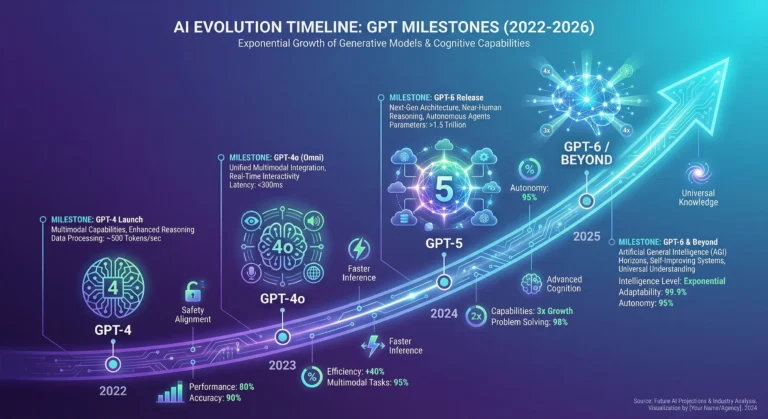
How AI Has Evolved in 2026
We’ve come a long way from the early days of GPT-3.5. Here’s where things stand:
The AI is smarter, faster, and more capable than ever. But the fundamental principle hasn’t changed: better prompts = better results.
The Prompt Engineering Advantage
People who master prompt engineering consistently report:
- 📈 10x better outputs from ChatGPT
- ⏱️ 70% less time editing and revising
- 💡 More creative and unique results
- 🎯 Higher accuracy on first attempts
- 💰 Real ROI when applied to business tasks
This isn’t hype. It’s the documented reality of working smarter with AI.
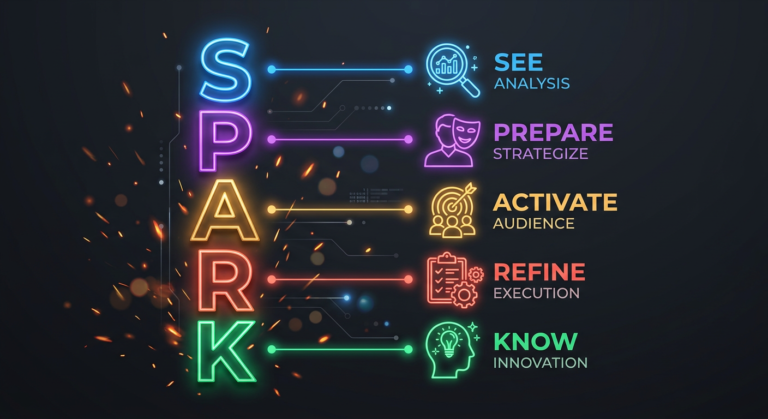
How to Write Better ChatGPT Prompts: The SPARK Framework {#spark-framework}
Before we dive into the 100 prompts, let’s give you the skill to write your own.
We created the SPARK Framework — a simple, repeatable formula for crafting prompts that deliver outstanding results every time.
S — Specific
Vague prompts get vague answers. Be precise about what you want.
- ❌ “Write about fitness.”
- ✅ “Write a 500-word beginner’s guide to starting a home workout routine with zero equipment.”
Pro Tip: Include word count, format (listicle, guide, email), and the exact topic.
P — Persona
Define who the output is for. ChatGPT adjusts its language, complexity, and examples based on audience.
- ❌ “Explain blockchain.”
- ✅ “Explain blockchain technology to a 12-year-old who loves video games. Use gaming analogies.”
Pro Tip: Mention experience level, demographics, or psychographics of your audience.
A — Audience
Define who the output is for. ChatGPT adjusts its language, complexity, and examples based on audience.
- ❌ “Explain blockchain.”
- ✅ “Explain blockchain technology to a 12-year-old who loves video games. Use gaming analogies.”
Pro Tip: Mention experience level, demographics, or psychographics of your audience.
R — Requirements
Set constraints. Specify format, tone, length, structure, and any rules.
- ❌ “Write a blog post.”
- ✅ “Write a 1,000-word blog post with H2 subheadings, bullet points, a conversational tone, and a strong CTA at the end.”
Pro Tip: Constraints don’t limit creativity — they focus it.
K — Knowledge
Provide context, background information, or examples. The more relevant information ChatGPT has, the better it performs.
- ❌ “Write a product description.”
- ✅ “Write a product description for our new wireless earbuds. Key features: 40-hour battery, ANC, IPX7 waterproof, $79 price point. Our brand voice is playful and bold. Target audience: Gen Z fitness enthusiasts. Here’s an example of our previous product description: [paste example].”
Pro Tip: Paste examples of writing you like so ChatGPT can match the style.
📝 Best ChatGPT Prompts for Writing & Content (1-20) {#writing-prompts}
Writing is the #1 use case for ChatGPT — and for good reason.
Whether you’re crafting blog posts, emails, social media captions, or sales copy, the right prompt makes you 10x faster and 5x better.
Blog Writing Prompts (1-5)
Prompt #1 — SEO Blog Post Writer
“You are an expert SEO content writer with 10 years of experience ranking articles on Google’s first page.
Write a comprehensive, 1,500-word blog post on the topic: [YOUR TOPIC]. Target the primary keyword [YOUR KEYWORD] and include it naturally 5-7 times.
Structure the post with an engaging introduction (hook + promise), H2 and H3 subheadings, short paragraphs (2-3 sentences max), bullet points, one data-backed statistic, a practical example, and a compelling conclusion with a CTA.
Tone: conversational, authoritative, zero fluff. Write like a human expert, not an AI.”
Prompt #2 — Blog Post Outline Generator
“Act as a senior content strategist. Create a detailed blog post outline for the topic: [YOUR TOPIC].
The outline should include: a click-worthy H1 title (under 60 characters), a meta description (under 155 characters), 6-8 H2 sections with 2-3 H3 subsections each, key talking points under every heading, suggested word count per section, and 3 internal linking opportunities.
The outline should follow a logical flow that keeps readers engaged from start to finish.”
Prompt #3 — Blog Introduction Hook Writer
“Write 5 different opening hooks for a blog post about [YOUR TOPIC].
Each hook should be 2-3 sentences maximum and use a different technique:
(1) a shocking statistic,
(2) a bold controversial statement,
(3) a relatable pain point,
(4) a vivid storytelling moment,
(5) a direct question. Make each one impossible to stop reading.
Target audience: [YOUR AUDIENCE].”
Prompt #4 — Listicle Post Creator
“You are a viral content writer. Create a [NUMBER]-item listicle blog post titled ‘[YOUR TITLE].’
For each item, include: a bold H3 heading, a 50-80 word description explaining why it matters, one practical tip or example, and a transition sentence to the next item.
Start with the most impactful items first. Add an introduction (100 words) and conclusion with CTA (80 words).
Tone: energetic, helpful, and skimmable.”
Prompt #5 — Blog Post Refresher / Updater
“You are an SEO content editor. I’m going to paste an existing blog post below.
Your job is to:
(1) update any outdated information for 2026,
(2) improve readability by breaking up long paragraphs,
(3) add 3 new relevant sections that competitors cover but I’m missing,
(4) strengthen the introduction with a better hook,
(5) optimize for the keyword [YOUR KEYWORD] without keyword stuffing,
(6) add a FAQ section with 4 questions.
Keep my original voice but make everything sharper and more valuable.
Here’s the post: [PASTE POST]”
Prompt #6 — High-Converting Landing Page Copy
“You are a world-class direct response copywriter in the style of David Ogilvy.
Write landing page copy for [PRODUCT/SERVICE]. Structure:
(1) A headline that communicates the #1 benefit in under 10 words,
(2) A subheadline that adds specificity,
(3) 3 benefit-driven sections with icons,
(4) Social proof section,
(5) FAQ section (4 questions),
(6) A risk-reversal statement,
(7) A strong CTA.
Target audience: [AUDIENCE].
Main pain point: [PAIN POINT].
Key differentiator: [WHAT MAKES IT UNIQUE].
Tone: confident, clear, zero jargon.”
Prompt #7 — Product Description Writer
“Write 3 versions of a product description for [PRODUCT NAME].
Version 1: Short (50 words) for a product card.
Version 2: Medium (150 words) for a product page.
Version 3: Long (300 words) for SEO. Key features: [LIST FEATURES].
Target buyer: [AUDIENCE].
Brand voice: [DESCRIBE VOICE]. Include sensory language, emphasize benefits over features, and end each version with a micro-CTA.”
Prompt #8 — Sales Page Headline Generator
“Generate 20 high-converting headline options for a sales page selling [PRODUCT/SERVICE].
Use proven headline formulas including:
How-To, Number, Question, Command, Testimonial, Curiosity Gap, Before-After, and Fear of Missing Out.
Each headline should communicate a clear benefit and create urgency.
Target audience: [AUDIENCE]. Price point: [PRICE]. Mark your top 3 recommendations with a ⭐.”
Prompt #9 — Value Proposition Writer
“Help me craft a powerful value proposition for [YOUR BUSINESS/PRODUCT].
Create 5 versions using different frameworks:
(1) The XYZ Formula: ‘We help [X] do [Y] by [Z]’,
(2) The Before-After-Bridge,
(3) The ‘Only’ Statement: ‘The only [product] that [unique benefit]’,
(4) The Problem-Solution,
(5) The Steve Blank Formula: ‘We help [customer] who want to [job to be done] by [action] unlike [alternative].’
My target customer:
[AUDIENCE].
Main problem I solve: [PROBLEM].
My unique advantage: [ADVANTAGE].”
Prompt #10 — Testimonial Request Email
“Write a friendly, non-pushy email requesting a testimonial from a happy customer.
The customer recently purchased [PRODUCT/SERVICE] and had a great experience. Include:
(1) a personalized opening referencing their purchase,
(2) why their feedback matters,
(3) 3-4 specific questions they can answer to make writing easy,
(4) an option to provide a video testimonial,
(5) a small incentive offer. Keep it under 200 words. Tone: warm, grateful, and easy to say yes to.”
Email Writing Prompts (11-15)
Prompt #11 — Cold Email Outreach Sequence
“You are a B2B cold email expert who consistently achieves 40%+ open rates. Write a 3-email outreach sequence for [YOUR PURPOSE — e.g., selling a SaaS tool to marketing managers].
Email 1: The initial touch (create curiosity, no hard sell, under 80 words).
Email 2: The follow-up sent 3 days later (add a case study or social proof, under 100 words).
Email 3: The breakup email sent 5 days later (create FOMO, offer last chance, under 60 words). Each email needs: a compelling subject line (under 40 characters), a personalization placeholder [FIRST NAME], and exactly one CTA.
Avoid spam trigger words.”
Prompt #12 — Welcome Email Series
“Create a 5-email welcome sequence for new subscribers of [YOUR BUSINESS/NEWSLETTER].
Email 1 (Day 0): Warm welcome + deliver the promised lead magnet + set expectations.
Email 2 (Day 2): Share your origin story + build connection.
Email 3 (Day 4): Deliver your best piece of content + establish authority.
Email 4 (Day 6): Share a customer success story + soft pitch.
Email 5 (Day 8): Make your core offer + strong CTA + urgency.
Each email: 150-250 words, conversational tone, one clear CTA, compelling subject line. My brand voice is [DESCRIBE VOICE].”
Prompt #13 — Newsletter Content Writer
“Write this week’s edition of my newsletter called [NEWSLETTER NAME]. Topic: [THIS WEEK’S TOPIC].
Structure:
(1) A catchy one-liner opener,
(2) One main insight or lesson (200 words),
(3) 3 quick actionable tips,
(4) One tool or resource recommendation,
(5) A thought-provoking question for engagement,
(6) A PS line with a teaser for next week.
Tone: [YOUR TONE — e.g., witty, insightful, no-BS]. Audience: [YOUR AUDIENCE]. Keep total length under 500 words.”
Prompt #14 — Apology / Crisis Communication Email
“Write a professional yet empathetic apology email from [COMPANY NAME] to customers regarding [DESCRIBE THE ISSUE — e.g., a data breach, service outage, billing error]. The email should:
(1) acknowledge the issue immediately without making excuses,
(2) explain what happened in simple terms,
(3) detail exactly what we’re doing to fix it,
(4) offer a specific make-good gesture [e.g., credit, discount, free month],
(5) provide a direct contact for questions,
(6) end with a forward-looking, trust-rebuilding statement.
Tone: sincere, transparent, and human. Under 300 words.”
Prompt #15 — Re-engagement Email for Inactive Users
“Write 2 re-engagement emails for users who haven’t logged into [YOUR PRODUCT/APP] in 30+ days.
Email 1: The ‘We miss you’ approach — highlight what they’re missing, mention a new feature, include a one-click re-engagement CTA.
Email 2: The ‘Last chance’ approach — create urgency (account data may be deleted, special offer expiring), include a feedback survey link. Both emails: under 150 words, attention-grabbing subject line, single focused
CTA. Add a touch of humor if appropriate.”
Social Media Writing Prompts (16-20)
Prompt #16 — LinkedIn Post Generator
“You are a LinkedIn content strategist whose posts regularly get 100K+ impressions.
Write a LinkedIn post about [YOUR TOPIC]. Use the hook-story-lesson format:
(1) Opening hook — a bold statement or contrarian take in the first line (this is critical for stopping the scroll),
(2) A short personal story or observation (3-4 sentences),
(3) The key insight or lesson,
(4) 3-5 actionable takeaways as bullet points,
(5) A conversation-starting question at the end. Format: short sentences, line breaks after every 1-2 sentences,
NO hashtags in the middle of the post (put 3-5 at the very end). Tone: authentic, insightful, zero cringe.”
Prompt #17 — Twitter/X Thread Creator
“Create a viral Twitter/X thread (10 tweets) about [YOUR TOPIC].
Tweet 1: A scroll-stopping hook that creates massive curiosity (start with a bold claim or number).
Tweets 2-9: One valuable insight per tweet with examples, frameworks, or data.
Tweet 10: Summary + CTA (follow for more, bookmark this, share with someone who needs it).
Rules: Each tweet under 280 characters. Use line breaks. Start each tweet with a pattern interrupt. Include 2-3 relevant visuals suggestions. Add ‘Thread 🧵’ to the first tweet.”
Prompt #18 — Instagram Caption Writer
“Write 5 Instagram captions for a [TYPE OF BUSINESS/PERSONAL BRAND] posting about [TOPIC].
For each caption:
(1) Start with a hook that makes people tap ‘more’ (the first line is everything),
(2) Tell a mini-story or share a revelation (3-4 sentences),
(3) Include a clear CTA (save, share, comment, click link in bio),
(4) Add 15-20 relevant hashtags separated at the bottom,
(5) Include 2-3 emoji naturally (don’t overdo it). Tone: [YOUR TONE]. Each caption: 100-150 words.”
Prompt #19 — TikTok/Reels Script Writer
“Write a 60-second TikTok/Reels script about [YOUR TOPIC].
Format it as: HOOK (0-3 seconds): A shocking statement, question, or visual gag that stops scrolling.
SETUP (3-15 seconds): Establish the context/problem. CONTENT (15-50 seconds): Deliver 3 key points with energy and examples.
CTA (50-60 seconds): Tell viewers exactly what to do next. Include: on-screen text suggestions, background music mood recommendation, and visual transition notes.
Tone: [YOUR TONE].
Make it feel native to the platform, not like a commercial.”
Prompt #20 — Social Media Content Calendar
“Create a 30-day social media content calendar for [YOUR BUSINESS/BRAND] across [PLATFORMS — e.g., Instagram, LinkedIn, Twitter/X].
Include:
(1) The date,
(2) Platform,
(3) Content type (carousel, reel, static, story, text post),
(4) Topic/theme,
(5) Caption hook (first line only), (6) CTA,
(7) Hashtag cluster.
Follow the 80/20 rule: 80% value/entertainment, 20% promotional. Include theme days (e.g., Motivation Monday, Tutorial Thursday).
Business niche: [YOUR NICHE]. Target audience: [YOUR AUDIENCE].
Content pillars: [LIST 3-4 PILLARS]. Format as a table.”
📈 Best ChatGPT Prompts for Marketing (21-35) {#marketing-prompts}
Marketing is where ChatGPT truly shines. From SEO strategy to ad copy, these prompts will make you feel like you have an entire marketing department at your fingertips.
SEO & Content Marketing Prompts (21-25)
Prompt #21 — Keyword Research Assistant
“You are an SEO specialist with deep expertise in keyword research.
I need you to generate a comprehensive keyword list for a website in the [YOUR NICHE] industry.
Provide:
(1) 10 high-volume head keywords,
(2) 15 long-tail keywords with buyer intent,
(3) 10 question-based keywords (for featured snippets),
(4) 5 comparison keywords (X vs Y),
(5) 5 ‘best of’ keywords. For each keyword,
estimate: search intent (informational, transactional, navigational, commercial), relative competition level (low/medium/high), and content format recommendation (blog, landing page, video, tool). Group keywords into topical clusters.”
Prompt #22 — Content Strategy Planner
“Act as a content marketing director. Create a 90-day content strategy for [YOUR BUSINESS] targeting [YOUR AUDIENCE].
Include:
(1) 3-4 content pillars with justification,
(2) 12 blog post ideas with title, target keyword, and estimated traffic potential,
(3) 4 lead magnet ideas,
(4) Content distribution plan across channels,
(5) KPIs to track,
(6) A content repurposing plan (1 blog → multiple assets).
My business goals: [GOALS]. My current traffic: [TRAFFIC]. My biggest competitor: [COMPETITOR].”
Prompt #23 — SEO Meta Title & Description Generator
“Generate SEO-optimized meta titles and meta descriptions for the following 5 pages on my website: [LIST PAGES WITH TOPICS AND TARGET KEYWORDS].
Rules: Titles must be under 60 characters, include the target keyword near the front, and create click-worthy curiosity.
Descriptions must be under 155 characters, include the keyword naturally, communicate a clear benefit, and include a soft CTA.
Create 3 variations for each page so I can A/B test.”
Prompt #24 — Competitor Content Gap Analyzer
“You are a competitive intelligence analyst. I’m going to describe my business and my top 3 competitors.
Identify:
(1) Content topics they cover that I don’t (content gaps),
(2) Keywords they rank for that I should target,
(3) Content formats they use that I’m missing (videos, tools, templates, podcasts),
(4) Their content strengths I should learn from,
(5) Their content weaknesses I can exploit,
(6) 10 specific blog post ideas that would help me steal their traffic.
My business: [DESCRIBE].
Competitors: [LIST 3 COMPETITOR URLS OR NAMES].”
Prompt #25 — Internal Linking Strategy Builder
“Act as a technical SEO expert. Based on the following list of published blog posts on my site, create a strategic internal linking plan.
For each post, recommend:
(1) Which other posts should link TO it (with suggested anchor text),
(2) Which other posts it should link FROM (with suggested anchor text),
(3) Any topical cluster relationships. Prioritize linking to high-value money pages and pillar content.
Here are my posts: [LIST POST TITLES AND URLS]. My money pages are: [LIST MONEY PAGES].”
Social Media Marketing Prompts (26-30)
Prompt #26 — Social Media Ad Copy Writer
“Write high-converting Facebook/Instagram ad copy for [PRODUCT/SERVICE].
Create 3 variations using different angles:
(1) Pain-Agitation-Solution: Start with the target audience’s biggest frustration,
(2) Social Proof: Lead with results and testimonials,
(3) Curiosity/Intrigue: Create an information gap that compels clicks. For each variation, provide: Primary text (125 words max),
Headline (40 characters max), Description (30 characters max), and CTA button recommendation.
Target audience: [AUDIENCE]. Offer: [YOUR OFFER]. Landing page goal: [GOAL].”
Prompt #27 — Influencer Outreach Message
“Write 3 versions of a DM/email to reach out to a [PLATFORM] influencer for a collaboration.
Version 1: Paid partnership proposal.
Version 2: Product gifting/exchange. Version 3: Affiliate partnership. Each message should:
(1) Open with a genuine compliment about their specific content (include a placeholder),
(2) Clearly state the opportunity,
(3) Explain what’s in it for them,
(4) Include a low-friction next step,
(5) Be under 100 words.
Tone: professional but casual. Avoid sounding like a template.”
Prompt #28 — User-Generated Content Campaign
“Design a UGC (User-Generated Content) campaign for [YOUR BRAND/PRODUCT].
Include:
(1) Campaign name and branded hashtag,
(2) Campaign concept and theme,
(3) Clear submission guidelines for participants,
(4) Incentive structure (prizes, features, discounts),
(5) Launch announcement post copy for 3 platforms,
(6) 5 prompt ideas to inspire user submissions,
(7) A 4-week rollout timeline,
(8) How to repurpose the best UGC across marketing channels.
Target audience: [AUDIENCE]. Brand personality: [DESCRIBE].”
Prompt #29 — Social Proof & Case Study Writer
“Transform the following customer results into a compelling case study for my website and social media.
Client info: [NAME/INDUSTRY], Challenge: [WHAT THEY STRUGGLED WITH], Solution: [HOW YOUR PRODUCT/SERVICE HELPED], Results: [SPECIFIC METRICS/OUTCOMES].
Write:
(1) A 500-word detailed case study for the website (Problem → Solution → Results format),
(2) A 200-word LinkedIn post version,
(3) A 3-slide carousel outline for Instagram,
(4) 3 pull-quote testimonials extracted from the story. Make the results the hero. Include specific numbers wherever possible.”
Prompt #30 — Brand Voice Guide Creator
“Help me define and document my brand voice for [BRAND NAME]. Based on the following information,
create a comprehensive brand voice guide:
My industry: [INDUSTRY]. My target audience: [AUDIENCE]. My brand values: [VALUES]. Brands I admire: [LIST 2-3].
Include:
(1) 4 brand voice characteristics with descriptions (e.g., ‘Bold but not arrogant’),
(2) A ‘We say / We don’t say’ table with 10 examples,
(3) Tone variations for different contexts (social media, email, website, support),
(4) 3 sample paragraphs written in our brand voice,
(5) Grammar and style rules (Oxford comma, contractions, emoji policy).”
Advertising & Paid Campaign Prompts (31-35)
Prompt #31 — Google Ads Copy Writer
“Create Google Search Ads for [PRODUCT/SERVICE] targeting the keyword [YOUR KEYWORD].
Write 5 complete ad variations, each with:
Headline 1 (30 chars),
Headline 2 (30 chars),
Headline 3 (30 chars),
Description 1 (90 chars), Description 2 (90 chars). Include the target keyword in at least one headline. Use power words, numbers, and urgency. Include a unique selling point in every ad. Add 10 sitelink extension suggestions with descriptions.
Campaign goal: [GOAL]. Competitor advantage: [WHAT SETS YOU APART].”
Prompt #32 — A/B Test Hypothesis Generator
“I’m running [TYPE OF CAMPAIGN — email, landing page, ad] for [YOUR PRODUCT/SERVICE].
Current performance: [CURRENT METRICS]. Generate 10 A/B test hypotheses I should run, formatted as:
‘If we change [VARIABLE] from [CURRENT] to [PROPOSED], then [METRIC] will improve by [EXPECTED %] because [REASONING].’
Prioritize tests by:
(1) Expected impact (high/medium/low),
(2) Ease of implementation (easy/medium/hard),
(3) Confidence level (high/medium/low). Recommend which 3 tests to run first.”
Prompt #33 — Marketing Funnel Builder
“Design a complete marketing funnel for [YOUR PRODUCT/SERVICE] at the [PRICE POINT] price point. Map out every stage:
(1) AWARENESS: Top 3 traffic channels with content ideas,
(2) INTEREST: Lead magnet concept and opt-in page copy,
(3) CONSIDERATION: Email nurture sequence outline (5 emails),
(4) DECISION: Sales page framework and objection handlers,
(5) ACTION: Checkout page optimization tips,
(6) RETENTION: Post-purchase sequence and upsell strategy.
Target audience: [AUDIENCE]. Average customer lifetime value: [LTV]. Current biggest bottleneck: [BOTTLENECK].”
Prompt #34 — Ad Creative Brief Generator
“Create a detailed creative brief for a [PLATFORM — Facebook, YouTube, TikTok] ad campaign promoting [PRODUCT/SERVICE].
Include:
(1) Campaign objective,
(2) Target audience personas (2 personas with demographics, psychographics, pain points),
(3) Key message hierarchy (primary message, secondary messages, proof points),
(4) 3 creative concepts with visual descriptions,
(5) Script/storyboard for a 30-second video ad,
(6) Copy for static ad creative (3 versions),
(7) Call-to-action,
(8) Success metrics and KPIs. Budget: [BUDGET].
Campaign duration: [DURATION].”
Prompt #35 — Marketing Report Summarizer
“I’m going to paste my monthly marketing data below. Act as a CMO and create an executive marketing report that includes:
(1) Top-line performance summary (3-4 key takeaways),
(2) Channel-by-channel breakdown (what worked, what didn’t, why),
(3) Comparison to previous month (trends and patterns),
(4) ROI analysis by channel,
(5) Top 3 wins worth celebrating,
(6) Top 3 concerns that need attention,
(7) 5 specific action items for next month with owners and deadlines. Present data visually with tables where helpful.
Here’s the data: [PASTE DATA].”
💼 Best ChatGPT Prompts for Business (36-50) {#business-prompts}
From strategy to operations, these prompts turn ChatGPT into a business consultant you’d normally pay thousands of dollars to access.
Business Strategy Prompts (36-40)
Prompt #36 — Business Plan Outline Generator
“You are a startup advisor who has helped 100+ companies raise funding. Create a comprehensive business plan outline for [YOUR BUSINESS IDEA]. Include these sections with detailed bullet points of what to cover:
(1) Executive Summary,
(2) Problem Statement with market validation,
(3) Solution & Value Proposition,
(4) Market Analysis (TAM, SAM, SOM),
(5) Business Model & Revenue Streams,
(6) Competitive Analysis (include a comparison matrix template),
(7) Marketing & Sales Strategy,
(8) Operations Plan,
(9) Team & Hiring Plan,
(10) Financial Projections (what to include for 3 years),
(11) Funding Requirements & Use of Funds,
(12) Milestones & Timeline. Industry: [INDUSTRY]. Stage: [IDEA/MVP/GROWTH].”
Prompt #37 — SWOT Analysis Creator
“Conduct a thorough SWOT analysis for [YOUR BUSINESS/PRODUCT].
For each quadrant, provide at least 5 specific, actionable points (not generic statements).
STRENGTHS: What internal advantages do we have? WEAKNESSES: What internal limitations need addressing?
OPPORTUNITIES: What external trends or gaps can we exploit? THREATS: What external risks could harm us?
After the SWOT, provide:
(1) 3 strategies that leverage Strengths to capture Opportunities (SO strategies),
(2) 3 strategies to use Strengths to mitigate Threats (ST strategies),
(3) 3 strategies to address Weaknesses by pursuing Opportunities (WO strategies).
Business context: [DESCRIBE YOUR BUSINESS, INDUSTRY, CURRENT SITUATION].”
Prompt #38 — Pricing Strategy Advisor
“Act as a pricing strategy consultant. Help me determine the optimal pricing for [YOUR PRODUCT/SERVICE].
Analyze these factors:
(1) Current pricing: [YOUR PRICE],
(2) Competitor pricing: [LIST COMPETITORS AND PRICES],
(3) Our cost structure: [COSTS],
(4) Target market’s willingness to pay: [INSIGHTS],
(5) Our positioning: [PREMIUM/MID/BUDGET].
Recommend:
(A) 3 pricing model options (one-time, subscription, freemium, tiered, usage-based, etc.) with pros/cons,
(B) Specific price points with justification,
(C) A pricing page structure with tier names and features,
(D) Psychological pricing tactics to implement,
(E) When and how to raise prices.”
Prompt #39 — Elevator Pitch Creator
“Craft 5 versions of an elevator pitch for [YOUR BUSINESS].
Version 1: 30-second pitch for investors.
Version 2: 15-second pitch for networking events.
Version 3: 60-second pitch for potential partners.
Version 4: One-sentence pitch for social media bios.
Version 5: Email pitch for cold outreach. My business: [DESCRIBE]. Problem I solve: [PROBLEM]. Target customer: [CUSTOMER]. Traction so far: [TRACTION]. What makes us unique: [DIFFERENTIATOR].
Each pitch should be memorable, jargon-free, and end with a clear ask or hook.”
Prompt #40 — Market Research Analyzer
“You are a market research analyst. Help me understand the market opportunity for [YOUR PRODUCT/SERVICE IDEA]. Research and analyze:
(1) Market size estimation (provide a framework to calculate TAM, SAM, SOM),
(2) Target customer segments (create 3 detailed personas),
(3) Key market trends driving demand,
(4) Potential barriers to entry,
(5) Regulatory considerations,
(6) 5 emerging opportunities most people are overlooking,
(7) Go-to-market strategy recommendation. Industry: [INDUSTRY].
Geography: [TARGET MARKET]. Existing data I have: [ANY EXISTING RESEARCH].”
Sales & Customer Service Prompts (41-45)
Prompt #41 — Sales Objection Handler
“You are a top-performing sales trainer.
List the 10 most common sales objections for [YOUR PRODUCT/SERVICE] and provide 2-3 response scripts for each objection.
Use proven frameworks:
(1) Feel-Felt-Found,
(2) Acknowledge-Bridge-Close,
(3) Question-Based Reframe. Objection categories to cover:
Price (‘It’s too expensive’), Timing (‘Not right now’), Competition (‘We use [competitor]’), Trust (‘I need to think about it’), Authority (‘I need to check with my boss’), Need (‘I’m not sure we need this’).
Include the exact words a salesperson should say. Product: [DESCRIBE]. Price: [PRICE]. Target buyer: [BUYER PERSONA].”
Prompt #42 — Customer Service Response Templates
“Create 10 customer service email response templates for [YOUR BUSINESS] covering these scenarios:
(1) Refund request — approved,
(2) Refund request — denied (with alternative),
(3) Product complaint,
(4) Shipping delay notification,
(5) Feature request acknowledgment,
(6) Bug report response,
(7) Subscription cancellation — win-back attempt,
(8) Positive review thank-you,
(9) Negative review response (public),
(10) Account security alert. Each template should:
be under 150 words, show empathy first, provide a clear next step, and match our brand tone: [DESCRIBE TONE]. Include [CUSTOMER NAME] and [AGENT NAME] placeholders.”
Prompt #43 — Sales Email Sequence
“Write a 5-email sales sequence for [YOUR PRODUCT/SERVICE] targeting [YOUR IDEAL CUSTOMER].
The prospect has [CONTEXT — e.g., downloaded a lead magnet, attended a webinar, signed up for a free trial].
Email 1 (Day 1): Value-first email — no pitch, just deliver an actionable quick win.
Email 2 (Day 3): Problem awareness — agitate a pain point they feel.
Email 3 (Day 5): Social proof — share a case study or testimonial.
Email 4 (Day 7): The pitch — present the offer with clear benefits.
Email 5 (Day 10): Last chance — scarcity/urgency + final CTA.
Each email: subject line, preview text, body (under 200 words), single CTA.”
Prompt #44 — Customer Feedback Survey Creator
“Design a customer satisfaction survey for [YOUR PRODUCT/SERVICE].
Create:
(1) 5 quantitative questions (rating scale 1-10 or multiple choice) measuring: overall satisfaction, likelihood to recommend (NPS), ease of use, value for money, and support quality.
(2) 3 qualitative questions (open-ended) that surface actionable insights.
(3) A follow-up question that segments promoters from detractors.
(4) An introduction paragraph explaining why their feedback matters.
(5) A thank-you message with a small incentive. Keep total completion time under 3 minutes. Format for easy integration into Typeform or Google Forms.”
Prompt #45 — Proposal / SOW Template
“Create a professional business proposal template for [YOUR SERVICE — e.g., web design, consulting, marketing]. Include these sections with example content:
(1) Cover page layout,
(2) Executive summary,
(3) Understanding of client’s needs,
(4) Proposed solution and approach,
(5) Scope of work with specific deliverables,
(6) Timeline with milestones,
(7) Investment (pricing) with payment terms,
(8) About us / why choose us,
(9) Case study or portfolio highlights,
(10) Terms and conditions,
(11) Next steps / how to get started.
Write it for a client who: [DESCRIBE IDEAL CLIENT AND PROJECT]. Make it persuasive, not just informational.”
Productivity & Operations Prompts (46-50)
Prompt #46 — Meeting Agenda & Notes Generator
“Create a structured meeting agenda for a [TYPE OF MEETING — weekly standup, quarterly review, project kickoff, brainstorming session] with [NUMBER] attendees. Include:
(1) Meeting objective (one sentence),
(2) Agenda items with time allocations (total meeting time: [DURATION]),
(3) Discussion prompts for each agenda item,
(4) Roles (facilitator, note-taker, timekeeper),
(5) Pre-meeting preparation checklist,
(6) A meeting notes template with sections for: decisions made, action items (with owners and deadlines), and parking lot items. Meeting topic: [TOPIC].”
Prompt #47 — SOP (Standard Operating Procedure) Writer
“Create a detailed Standard Operating Procedure (SOP) for [PROCESS — e.g., onboarding a new client, processing a refund, publishing a blog post].
Include:
(1) Purpose and scope,
(2) Roles and responsibilities,
(3) Required tools/software,
(4) Step-by-step instructions (numbered, detailed enough for someone doing this for the first time),
(5) Screenshots/visual placeholders,
(6) Common mistakes and how to avoid them,
(7) Quality checklist,
(8) Troubleshooting guide for common issues,
(9) Version history log. Write it so a new employee could follow it on Day 1 without asking any questions.”
Prompt #48 — Decision-Making Framework
“Help me make a decision about [DESCRIBE YOUR DECISION — e.g., should I hire a marketing agency or build in-house, should I launch Product A or Product B].
Apply 3 different decision-making frameworks:
(1) Weighted Decision Matrix: List criteria, assign weights, score each option.
(2) Second-Order Thinking: What are the consequences of each choice, and the consequences of those consequences?
(3) 10/10/10 Analysis: How will I feel about this decision in 10 minutes, 10 months, and 10 years?
After all 3 analyses, give me your recommendation with confidence level (high/medium/low) and the #1 risk to watch for.”
Prompt #49 — OKR (Objectives & Key Results) Generator
“Create OKRs for [YOUR TEAM/DEPARTMENT/COMPANY] for Q[QUARTER] 2026.
Based on the following context, propose 3 Objectives (ambitious but achievable), each with 3-4 measurable Key Results. Context: Our goals: [DESCRIBE GOALS]. Current challenges: [DESCRIBE CHALLENGES]. Last quarter results: [DESCRIBE]. Team size: [NUMBER]. Format each OKR as: Objective: [Qualitative, inspirational statement].
KR1: [Specific metric] from [current state] to [target].
KR2: … Include suggested initiatives (specific projects/actions) under each KR.”
Prompt #50 — Hiring Job Description Writer
“Write a compelling job description for a [JOB TITLE] at [COMPANY NAME].
This isn’t a boring, generic JD — make it attract top talent. Include:
(1) A hook opening about why this role matters and what makes it exciting,
(2) About the company (100 words that sell the mission and culture),
(3) What you’ll do (5-7 responsibilities focused on impact, not tasks),
(4) What you bring (must-haves vs nice-to-haves, clearly separated),
(5) What we offer (benefits, culture perks, growth opportunities),
(6) Salary range: [RANGE],
(7) How to apply with what to include. Industry: [INDUSTRY]. Company stage: [STARTUP/GROWTH/ENTERPRISE].
Location: [REMOTE/HYBRID/ONSITE]. Tone: [DESCRIBE — e.g., bold, human, mission-driven].”
💻 Best ChatGPT Prompts for Coding (51-60) {#coding-prompts}
Whether you’re a beginner or senior developer, these prompts turn ChatGPT into a powerful coding partner that writes, debugs, explains, and optimizes code.
Code Writing & Debugging (51-55)
Prompt #51 — Code Generator with Best Practices
“You are a senior [LANGUAGE — e.g., Python, JavaScript, TypeScript] developer with 15 years of experience. Write [DESCRIBE WHAT YOU NEED — e.g., a REST API endpoint that handles user authentication with JWT tokens]. Requirements:
(1) Follow clean code principles and [LANGUAGE] best practices,
(2) Include error handling and edge cases,
(3) Add meaningful comments explaining complex logic,
(4) Use proper naming conventions,
(5) Include type annotations/definitions where applicable,
(6) Write it to be production-ready, not just a demo.
Framework/stack: [YOUR STACK]. Additional context: [ANY SPECIFIC REQUIREMENTS].”
Prompt #52 — Bug Debugger & Fixer
“I have a bug in my code and I need help fixing it. Here’s the code: [PASTE CODE]. Expected behavior: [WHAT IT SHOULD DO]. Actual behavior: [WHAT IT ACTUALLY DOES]. Error message (if any): [PASTE ERROR]. Steps to reproduce: [STEPS].
Please:
(1) Identify the root cause of the bug,
(2) Explain WHY it’s happening (not just what to fix),
(3) Provide the corrected code,
(4) Highlight what you changed with comments,
(5) Suggest any additional improvements you notice,
(6) List any related bugs this issue might cause.”
Prompt #53 — Code Explanation / Learning Aid
“Explain the following code to me like I’m a [LEVEL — beginner, intermediate, senior developer switching languages]. Go through it line-by-line and explain:
(1) What each section does,
(2) WHY it’s written that way (design decisions),
(3) Any patterns or principles being used,
(4) Potential pitfalls or improvements,
(5) How this fits into a larger application. Use analogies where helpful.
After the explanation, give me 3 practice exercises I could try to reinforce these concepts. Here’s the code: [PASTE CODE].”
Prompt #54 — Full-Stack Feature Builder
“I’m building a [TYPE OF APPLICATION] using [YOUR TECH STACK — e.g., Next.js, Node.js, PostgreSQL, Tailwind CSS]. Help me build the [FEATURE NAME] feature.
Provide:
(1) Database schema/model design,
(2) Backend API endpoints (routes, controllers, middleware),
(3) Frontend component structure,
(4) The actual code for each part,
(5) Integration/connection between frontend and backend,
(6) Basic validation and error handling,
(7) Suggested tests to write.
Requirements: [LIST SPECIFIC REQUIREMENTS]. User flow: [DESCRIBE THE USER JOURNEY].”
Prompt #55 — Regex Pattern Generator
“Create regular expressions for the following validation tasks. For each regex:
(1) Provide the pattern,
(2) Explain what each part of the regex does,
(3) List 5 strings that should MATCH,
(4) List 5 strings that should NOT match,
(5) Provide a ready-to-use code snippet in [LANGUAGE].
Tasks: [LIST YOUR REGEX NEEDS — e.g., email validation, phone number formatting, URL extraction, password strength checker, credit card number detection]. Include edge cases and note any limitations.”
Code Review & Optimization (56-60)
Prompt #56 — Code Review Expert
“Act as a senior code reviewer conducting a thorough pull request review. Review the following code for:
(1) Bugs and logic errors,
(2) Security vulnerabilities (SQL injection, XSS, etc.),
(3) Performance issues and optimization opportunities,
(4) Code readability and maintainability,
(5) Adherence to [LANGUAGE/FRAMEWORK] best practices, (6) Test coverage gaps, (7) DRY principle violations. For each issue: rate severity (critical/major/minor/suggestion), explain the problem, and provide the improved code. End with an overall assessment: Approve / Request Changes / Needs Major Revision. Here’s the code: [PASTE CODE].”
Prompt #57 — Code Refactoring Assistant
“Refactor the following code to improve its quality without changing its functionality. Apply these principles:
(1) SOLID principles,
(2) DRY (Don’t Repeat Yourself),
(3) Separation of concerns,
(4) Meaningful variable/function names,
(5) Reduced complexity (lower cyclomatic complexity),
(6) Better error handling. Show the refactored code, then provide a ‘before vs after’ summary explaining each change and why it matters.
If the code would benefit from a design pattern, suggest and implement it. Here’s the code: [PASTE CODE].”
Prompt #58 — API Documentation Generator
“Generate comprehensive API documentation for the following endpoints. For each endpoint, include:
(1) HTTP method and URL path,
(2) Description of what it does,
(3) Authentication requirements,
(4) Request parameters (path, query, body) with types and validation rules,
(5) Request body example (JSON),
(6) Response body example (JSON) for success and error states,
(7) Status codes and their meanings,
(8) Rate limiting info,
(9) Code examples in cURL, JavaScript (fetch), and Python (requests).
Here are my endpoints: [PASTE ENDPOINT CODE OR DESCRIPTIONS].”
Prompt #59 — Database Query Optimizer
“Optimize the following database query for performance. Current query: [PASTE QUERY]. Database: [MySQL/PostgreSQL/MongoDB/etc.]. Table size: approximately [ROW COUNT] rows. Current execution time: [TIME]. Please:
(1) Analyze why the current query is slow,
(2) Provide an optimized version,
(3) Suggest indexes that should exist,
(4) Explain the execution plan,
(5) Provide alternative approaches if applicable,
(6) Estimate the performance improvement,
(7) Note any trade-offs of the optimized approach.
Schema info: [PASTE RELEVANT SCHEMA].”
Prompt #60 — README.md Generator
“Create a professional, comprehensive README.md for my [TYPE] project called [PROJECT NAME]. Include:
(1) Project title with badges (build status, version, license),
(2) A clear, concise description (what it does and why it matters),
(3) Screenshot/demo GIF placeholder,
(4) Features list,
(5) Tech stack,
(6) Installation guide (step-by-step),
(7) Usage examples with code snippets,
(8) API reference (if applicable),
(9) Configuration/environment variables,
(10) Contributing guidelines,
(11) License,
(12) Credits/acknowledgments,
(13) Contact/support info.
Project details: [DESCRIBE YOUR PROJECT]. Make it good enough to impress potential contributors and users.”
🎓 Best ChatGPT Prompts for Education (61-70) {#education-prompts}
Whether you’re a student trying to learn faster or an educator creating better content, these prompts make learning and teaching dramatically more effective.
Learning & Study Prompts (61-65)
Prompt #61 — Personal Tutor
“You are an expert tutor in [SUBJECT]. I’m a [LEVEL — high school student, college undergrad, professional] trying to understand [SPECIFIC TOPIC]. Teach me this concept using the following approach:
(1) Start with a simple analogy from everyday life,
(2) Explain the core concept in plain language (no jargon),
(3) Give a concrete example with step-by-step walkthrough,
(4) Show me a common mistake people make and how to avoid it,
(5) Provide a practice problem for me to try (then wait for my answer before giving the solution). Adjust your explanations based on my responses.
If I’m confused, try a different angle. Be patient, encouraging, and Socratic.”
Prompt #62 — Study Guide Creator
“Create a comprehensive study guide for [SUBJECT/EXAM — e.g., AP Biology, AWS Solutions Architect, CPA Exam].
Include:
(1) All major topics and subtopics organized by importance (high yield vs low yield),
(2) Key concepts to understand (not just memorize),
(3) Must-know formulas, definitions, or frameworks,
(4) Common exam traps and how to avoid them,
(5) 20 practice questions (mix of easy, medium, hard) with explained answers,
(6) A recommended study schedule for [TIMEFRAME — e.g., 2 weeks, 1 month],
(7) Memory techniques (mnemonics) for tricky concepts.
Current knowledge level: [BEGINNER/INTERMEDIATE/ADVANCED].”
Prompt #63 — Explain Like I'm Five (ELI5)
“Explain [COMPLEX TOPIC — e.g., quantum computing, blockchain, inflation, neural networks] in 5 different ways, each simpler than the last:
Level 1: Explain to a PhD student (technical, precise).
Level 2: Explain to a college freshman (clear, some jargon okay).
Level 3: Explain to a curious teenager (relatable, use pop culture references).
Level 4: Explain to a 10-year-old (simple, use fun analogies).
Level 5: Explain to a 5-year-old (as simple as humanly possible, use toys/food/games analogies).
This helps me understand the concept at every depth.”
Prompt #64 — Flashcard Generator
“Create 30 flashcards for studying [SUBJECT/TOPIC]. Format each flashcard as: FRONT (Question/Term): [concise question or term] BACK (Answer): [clear, memorable answer in 1-3 sentences].
Organize the flashcards into 3 difficulty tiers:
🟢 Foundational (10 cards),
🟡 Intermediate (10 cards),
🔴 Advanced (10 cards).
Include: 2-3 ‘trick’ questions that test common misconceptions. Optimize the answers for retention (use mnemonics, patterns, or connections where possible). These should be ready to import into Anki or Quizlet.”
Prompt #65 — Research Paper Summarizer
“Summarize the following research paper/article in a structured format:
(1) One-sentence summary (the TL;DR),
(2) Research question / objective,
(3) Methodology (how they studied it),
(4) Key findings (3-5 bullet points),
(5) Practical implications (so what? why does this matter?),
(6) Limitations acknowledged,
(7) Questions this raises for further research,
(8) How I could apply these findings to [MY CONTEXT — e.g., my startup, my thesis, my teaching]. Write at a [LEVEL — undergraduate, graduate, expert] reading level.
Here’s the paper: [PASTE TEXT OR PROVIDE KEY DETAILS].”
Teaching & Tutoring Prompts (66-70)
Prompt #66 — Lesson Plan Generator
“Create a detailed lesson plan for teaching [TOPIC] to [STUDENT LEVEL — e.g., 10th graders, college freshmen, corporate trainees]. Duration: [CLASS LENGTH].
Include:
(1) Learning objectives (3 measurable outcomes using Bloom’s Taxonomy),
(2) Materials needed,
(3) Warm-up activity (5 min) to activate prior knowledge,
(4) Main instruction with step-by-step teaching flow,
(5) Interactive activity or group exercise,
(6) Check for understanding (formative assessment),
(7) Wrap-up and key takeaway,
(8) Homework or extension activity,
(9) Differentiation strategies for advanced and struggling students,
(10) Teacher notes and potential questions students might ask.”
Prompt #67 — Quiz & Assessment Creator
“Create a comprehensive assessment for [TOPIC/COURSE] suitable for [STUDENT LEVEL]. Include:
(1) 10 multiple choice questions (4 options each, with 1-2 tricky distractors),
(2) 5 true/false questions,
(3) 3 short answer questions,
(4) 2 essay questions with grading rubrics,
(5) 1 practical/application-based question. Provide: An answer key with explanations for each answer, point values, estimated completion time, and which learning objectives each question assesses.
Difficulty distribution: 30% easy, 50% medium, 20% challenging. Bloom’s taxonomy levels covered: Remember, Understand, Apply, Analyze.”
Prompt #68 — Interactive Exercise Designer
“Design 5 engaging, interactive classroom exercises for teaching [TOPIC] to [AUDIENCE]. Each exercise should:
(1) Have a catchy name,
(2) Take 10-20 minutes,
(3) Require minimal materials,
(4) Actively involve all students (not just a few),
(5) Include clear instructions a teacher can follow,
(6) Have a debrief/discussion component. Include a mix of:
group activity, individual challenge, debate/discussion, hands-on/kinesthetic activity, and gamified exercise.
For each, explain: what learning objective it addresses and what makes it memorable.”
Prompt #69 — Course Curriculum Designer
“Design a complete [NUMBER]-week course curriculum for [COURSE TOPIC] targeted at [AUDIENCE].
Include:
(1) Course description and learning outcomes (5-7 outcomes),
(2) Week-by-week breakdown with topic, subtopics, and key concepts,
(3) Required and recommended readings/resources for each week,
(4) Assignment schedule (types: essays, projects, quizzes, presentations),
(5) Major project/capstone description with milestones,
(6) Grading breakdown,
(7) Prerequisites,
(8) A course overview table.
Teaching philosophy:
[DESCRIBE — e.g., project-based, flipped classroom, Socratic]. Level: [INTRODUCTORY/INTERMEDIATE/ADVANCED].”
Prompt #70 — Student Feedback Writer
“Help me write constructive, encouraging feedback for a student’s [TYPE OF WORK — essay, project, presentation, code submission]. The student’s work quality is [EXCELLENT/GOOD/NEEDS IMPROVEMENT/POOR]. Write feedback that:
(1) Opens with something specific they did well (be genuine),
(2) Identifies 2-3 areas for improvement with specific suggestions (not just ‘do better’),
(3) Provides an example of how to improve one area,
(4) Connects feedback to learning objectives,
(5) Ends with encouragement and a clear next step.
Use a [WARM/DIRECT/MENTORING] tone.
The work is about: [DESCRIBE THE ASSIGNMENT AND WHAT THE STUDENT SUBMITTED].”
🎨 Best ChatGPT Prompts for Creative Projects (71-80) {#creative-prompts}
Unleash ChatGPT’s creative potential with these prompts for storytelling, brainstorming, and artistic exploration.
Storytelling & Fiction (71-75)
Prompt #71 — Story Idea Generator
“Generate 10 unique story ideas in the [GENRE — sci-fi, thriller, romance, fantasy, literary fiction] genre. For each idea, provide:
(1) A one-line logline (the movie-trailer pitch),
(2) The protagonist and their flaw,
(3) The central conflict,
(4) A surprising twist that subverts expectations,
(5) Why this story would resonate with modern readers. Make the ideas diverse — vary settings, time periods, and perspectives. Include at least 2 ideas that blend genres unexpectedly.
Rate each idea on commercial appeal (1-5) and literary merit (1-5).”
Prompt #72 — Character Development Workshop
“Help me develop a deep, multi-dimensional character for my [TYPE] story. Start by asking me 5 key questions about the character. Then create:
(1) Full character profile: name, age, appearance (3 distinctive physical details), occupation,
(2) Psychological profile: core desire, greatest fear, fatal flaw, moral code,
(3) Backstory: The defining moment that shaped who they are,
(4) Voice: Write a 100-word monologue in their voice,
(5) Relationships: 3 key relationships and the dynamic of each,
(6) Character arc: Who are they at the beginning vs end of the story,
(7) Contradictions: 2 internal contradictions that make them feel human.”
Prompt #73 — Dialogue Writer
“Write a [TONE — tense, funny, heartbreaking, flirtatious] dialogue scene between [CHARACTER A DESCRIPTION] and [CHARACTER B DESCRIPTION]. The scene is about [SITUATION/CONFLICT]. Requirements:
(1) Each character should have a distinct voice — I should be able to tell who’s speaking without dialogue tags,
(2) Include subtext — what they’re really saying underneath the words,
(3) Add brief action beats between dialogue lines (no ‘he said/she said’ overload),
(4) Build tension that escalates toward a turning point,
(5) End on a line that lingers. Length: 500-700 words.
Reference style: [AUTHOR/SHOW YOU ADMIRE — e.g., Aaron Sorkin, Sally Rooney].”
Prompt #74 — World-Building Assistant
“Help me build a detailed, internally consistent world for my [GENRE] story set in [BASIC PREMISE — e.g., a post-apocalyptic Earth 200 years from now, a medieval kingdom with a magic system]. Develop:
(1) Geography: Key locations with descriptions,
(2) Social structure: Classes, power dynamics, inequality,
(3) Magic/technology system: Rules, limitations, costs,
(4) Culture: Customs, beliefs, taboos, art, food,
(5) History: 3-5 major historical events that shaped the present,
(6) Economy: What do people trade/value?,
(7) Conflict: The central tension in this world,
(8) Sensory details: What does this world sound, smell, and feel like?
Make it feel lived-in, not like a wiki page.”
Prompt #75 — Plot Structure Builder
“Help me structure my [GENRE] novel/screenplay using the [FRAMEWORK — Three-Act Structure, Save the Cat, Hero’s Journey, Dan Harmon Story Circle, Kishōtenketsu]. My story premise: [DESCRIBE YOUR STORY IDEA IN 2-3 SENTENCES]. For each beat/stage of the framework, provide:
(1) What happens in my story at this point,
(2) The emotional state of the protagonist,
(3) The stakes at this stage,
(4) A potential scene idea. After the structure, identify:
(A) The 3 most critical scenes I need to nail,
(B) Potential plot holes to watch for,
(C) A B-story suggestion that mirrors the theme.”
Prompt #76 — AI Art Prompt Generator (for DALL-E, Midjourney, etc.)
“Generate 10 creative, detailed AI image prompts for [YOUR PURPOSE — e.g., blog header images, social media posts, product mockups, book covers]. Theme/subject: [DESCRIBE]. For each prompt include:
(1) Subject description with specific details,
(2) Art style reference (e.g., watercolor, photorealistic, 3D render, anime, vintage poster),
(3) Lighting and mood (e.g., golden hour, dramatic shadows, soft pastel),
(4) Composition (e.g., close-up, bird’s eye view, rule of thirds),
(5) Color palette suggestion,
(6) Negative prompt (what to exclude). Make each prompt progressively more creative and unusual.
Platform I’m using: [DALL-E / Midjourney / Stable Diffusion].”
Prompt #77 — Brainstorming Facilitator
“Help me brainstorm ideas for [YOUR CHALLENGE/GOAL]. Act as a creative thinking partner and use these 5 techniques in sequence:
(1) BRAIN DUMP: Give me 20 ideas rapidly without filtering (quantity over quality).
(2) SCAMPER: Take the top 3 ideas and apply Substitute, Combine, Adapt, Modify, Put to other use, Eliminate, Reverse.
(3) WORST IDEA: Flip the problem — what’s the worst possible approach? Then reverse-engineer insights.
(4) CROSS-POLLINATION: What would someone from a completely different industry ([INDUSTRY]) do?
(5) TOP 5 FINAL: From everything generated, curate the top 5 ideas ranked by impact and feasibility.
Add a ‘Wild Card’ idea that’s risky but could be game-changing.”
Prompt #78 — Brand Naming Generator
“Generate 30 brand name ideas for [DESCRIBE YOUR BUSINESS/PRODUCT — what it does, who it’s for, the feeling you want to evoke]. Create names in these categories:
(1) Descriptive names (5): Clearly state what you do,
(2) Invented/coined names (5): Made-up words that sound good,
(3) Metaphorical names (5): Abstract concepts that symbolize your value,
(4) Acronym/portmanteau names (5): Combine words creatively,
(5) Short & punchy names (5): Under 6 characters, memorable,
(6) Founder/story-based names (5): Names with narrative potential.
For each name: check if the .com domain is likely available (based on length/uniqueness), rate memorability (1-5), and note any potential negative connotations in other languages or contexts.”
Prompt #79 — Presentation / Slide Deck Outline
“Create a compelling presentation outline for a [DURATION — 10/20/30 minute] talk on [YOUR TOPIC] for [YOUR AUDIENCE]. Use the structure:
Slide 1: Title slide with a provocative subtitle.
Slides 2-3: Hook — open with a surprising fact, story, or question.
Slides 4-6: The problem / current reality (build tension).
Slides 7-12: Your solution / main content (3 key points, one per section).
Slides 13-14: Evidence / proof / case study. Slide 15: Call to action / takeaway.
Slide 16: Q&A. For each slide: suggest the visual (image, chart, or diagram), the one key message, and speaker notes (what to say).
Follow the ‘1 idea per slide’ rule. Presentation goal: [WHAT ACTION DO YOU WANT THE AUDIENCE TO TAKE?].”
Prompt #80 — Creative Writing Prompt Generator
“Generate 15 creative writing prompts designed to push my creativity and improve my writing skills. Create 3 prompts for each category:
(1) Flash fiction (under 500 words): Give me an unusual constraint + a scenario,
(2) Poetry: Provide a form (haiku, sonnet, free verse) + a surprising juxtaposition to explore,
(3) Personal essay: Provide a reflection question that forces vulnerability and deep thinking,
(4) Dialogue only: A scenario that must be told purely through conversation,
(5) Rewrite challenge: Take a familiar story/concept and reimagine it with a twist. Rate each prompt on difficulty:
🟢 Beginner,
🟡 Intermediate,
🔴 Advanced.
Add a ‘Why this exercise matters’ explanation for each.”
🧠 Best ChatGPT Prompts for Personal Development (81-90) {#personal-prompts}
Use ChatGPT as your personal life coach, career advisor, and accountability partner with these powerful self-improvement prompts.
Career & Resume Prompts (81-85)
Prompt #81 — Resume Rewriter & Optimizer
“You are a professional resume writer who has helped 500+ professionals land jobs at top companies. Rewrite my resume for a [TARGET JOB TITLE] position at [TYPE OF COMPANY]. Here’s my current resume: [PASTE RESUME]. Instructions:
(1) Rewrite every bullet point using the XYZ formula: ‘Accomplished [X] as measured by [Y] by doing [Z]’,
(2) Quantify achievements wherever possible (add realistic numbers if I haven’t),
(3) Optimize for ATS (Applicant Tracking Systems) by incorporating these keywords from the job description: [PASTE JOB DESCRIPTION OR KEY SKILLS],
(4) Strengthen the professional summary to be compelling in 3 lines,
(5) Remove any fluff, clichés, or passive language,
(6) Suggest an optimal resume format for my experience level.”
Prompt #82 — Cover Letter Writer
“Write a compelling cover letter for a [JOB TITLE] position at [COMPANY NAME]. Here’s the job description: [PASTE JD]. Here’s my background: [PASTE RESUME OR KEY HIGHLIGHTS]. The cover letter should:
(1) Open with a hook — NOT ‘I am writing to apply for…’ (start with enthusiasm, a connection to their mission, or a relevant accomplishment),
(2) Connect 3 specific requirements from the JD to my proven experience,
(3) Show I’ve researched the company (reference their recent news, values, or product),
(4) Convey genuine enthusiasm without being sycophantic,
(5) End with confidence and a specific CTA,
(6) Stay under 350 words. Tone: professional yet personable.”
Prompt #83 — Interview Preparation Coach
“You are an interview coach who has prepared candidates for roles at FAANG, top startups, and Fortune 500 companies. Help me prepare for a [JOB TITLE] interview at [COMPANY].
(1) Give me the 15 most likely interview questions for this role (mix of behavioral, technical, and situational).
(2) For each question, provide: a strategy for answering, a sample STAR-method response I can customize, and a common mistake to avoid.
(3) Generate 5 smart questions I should ask the interviewer.
(4) Give me a 30-second elevator pitch for ‘Tell me about yourself.’
(5) List 3 potential red flags the interviewer might probe and how to handle them. Job description: [PASTE JD].
My background: [KEY HIGHLIGHTS].”
Prompt #84 — LinkedIn Profile Optimizer
“Optimize my LinkedIn profile for maximum visibility and recruiter attraction. My target role: [DESIRED JOB TITLE]. My industry: [INDUSTRY]. Here’s my current profile: [PASTE KEY SECTIONS]. Rewrite:
(1) Headline (120 chars): Not just my job title — include value proposition and keywords,
(2) About section (2,000 chars max): Hook in first 2 lines (before ‘see more’), tell my professional story, include a CTA,
(3) Experience section: Rewrite top 2 roles with impact-focused bullet points,
(4) Skills: Recommend 15 skills to list (based on what recruiters search for),
(5) Featured section suggestions,
(6) Custom URL recommendation. Make it feel authentic, not like a robot wrote it.”
Prompt #85 — Career Path Advisor
“Act as a career counselor with 20 years of experience. Based on my background, help me chart my next career move. My current role: [ROLE]. Years of experience: [YEARS]. Skills: [KEY SKILLS]. What I enjoy: [WHAT ENERGIZES ME]. What I dislike: [WHAT DRAINS ME]. Salary expectation: [RANGE]. Location preference: [LOCATION]. Please provide:
(1) 3 career paths I should consider (with pros/cons of each),
(2) Skills gaps I need to fill for each path,
(3) Specific courses/certifications to pursue,
(4) A realistic timeline for transition,
(5) How to position my existing experience as an advantage,
(6) Networking strategies specific to each path,
(7) Potential risks and how to mitigate them.”
Health, Fitness & Life Planning (86-90)
Prompt #86 — Workout Plan Creator
“Create a [DURATION — 4/8/12 week] workout plan for a [EXPERIENCE LEVEL — beginner, intermediate, advanced] who wants to [GOAL — lose fat, build muscle, improve endurance, increase flexibility]. Constraints: [EQUIPMENT AVAILABLE — home, gym, minimal equipment]. Available days: [NUMBER] per week, [MINUTES] per session. Include:
(1) Weekly split structure,
(2) Exercises with sets, reps, and rest periods for each day,
(3) Warm-up and cool-down routines,
(4) Progressive overload plan (how to increase difficulty week over week),
(5) Active recovery day suggestions,
(6) Form tips for the 5 most important exercises.
My current fitness level: [DESCRIBE]. Any injuries/limitations: [LIST].”
Prompt #87 — Meal Plan Generator
“Create a 7-day meal plan for someone with these parameters: Goal: [LOSE WEIGHT / BUILD MUSCLE / MAINTAIN / GENERAL HEALTH]. Daily calorie target: [CALORIES]. Dietary restrictions: [ANY RESTRICTIONS — vegan, gluten-free, dairy-free, halal, keto, etc.]. Meals per day: [NUMBER]. Cooking skill: [BEGINNER/INTERMEDIATE/ADVANCED]. Time for cooking: [MINUTES] per meal max. Budget: [LOW/MEDIUM/HIGH]. Include:
(1) Breakfast, lunch, dinner, and snacks for each day,
(2) Approximate macros (protein, carbs, fat) per meal,
(3) A grocery list organized by store section,
(4) Meal prep tips to batch-cook on Sunday,
(5) 3 quick-swap alternatives for days when I’m busy.”
Prompt #88 — Annual Goal Setting Workshop
“Guide me through a comprehensive goal-setting session for 2026. Act as a life coach. Walk me through these steps:
(1) REFLECT: Ask me 5 questions about what worked and didn’t in 2025.
(2) VISION: Help me define what success looks like across 6 life areas: Career, Health, Relationships, Finances, Personal Growth, Fun/Adventure.
(3) SET GOALS: For each area, help me create 1 SMART goal.
(4) BREAK DOWN: Convert each goal into quarterly milestones, then monthly actions.
(5) SYSTEMS: Design one daily habit for each goal area.
(6) ACCOUNTABILITY: Create a weekly review template I can use every Sunday.
(7) OBSTACLES: Identify my top 3 potential obstacles and create if-then plans. Start by asking me the reflection questions, then we’ll build from there.”
Prompt #89 — Morning Routine Designer
“Design a personalized morning routine for me based on the following: Wake-up time: [TIME]. Time available before work/obligations: [MINUTES]. My priorities: [LIST — e.g., exercise, mindfulness, deep work, reading, journaling]. My energy type: [MORNING PERSON / SLOW STARTER]. Current struggle: [WHAT’S NOT WORKING]. Create:
(1) A minute-by-minute schedule,
(2) Why each activity is placed at that time (based on biology/productivity science),
(3) A ‘minimum viable morning’ version for tough days (under 20 min),
(4) A weekend version,
(5) Week 1 starter version (easing into it),
(6) Tips for actually sticking to it (habit stacking, accountability).
Base recommendations on proven science from sources like Andrew Huberman, James Clear, or Robin Sharma.”
Prompt #90 — Journaling Prompt Generator
“Create 30 days of journaling prompts designed to improve self-awareness, mental clarity, and emotional intelligence. Structure:
Week 1 (Days 1-7): Self-discovery — understanding who I am now.
Week 2 (Days 8-14): Emotional processing — working through feelings and stress.
Week 3 (Days 15-21): Gratitude and positive psychology — rewiring my focus.
Week 4 (Days 22-30): Future visioning — designing the life I want. Each prompt should:
(1) Be thought-provoking but not overwhelming,
(2) Take 10-15 minutes to answer,
(3) Include a follow-up question for deeper reflection,
(4) Have a practical action step.
Add a ‘Prompt of the Week’ for each week that’s a deeper, 30-minute journaling exercise.”
🎉 Best Fun & Miscellaneous ChatGPT Prompts (91-100) {#fun-prompts}
Because AI should be fun too. These prompts showcase ChatGPT’s versatility and are perfect for entertainment, parties, and creative exploration.
Fun & Entertainment Prompts (91-95)
Prompt #91 — "Choose Your Own Adventure" Game
“Create an interactive ‘Choose Your Own Adventure’ game. I am [CHARACTER DESCRIPTION] in [SETTING — e.g., a haunted mansion, a space station in the year 3000, a medieval kingdom]. Present each scene in vivid detail (100-150 words), describing what I see, hear, and feel. End each scene with 3 choices for what I do next. Track my inventory, health, and key decisions. Include: unexpected consequences for my choices, at least one plot twist I won’t see coming, hidden easter eggs, and multiple possible endings (good, bad, and secret). Start the adventure now.”
Prompt #92 — Debate Partner
“Let’s have a structured debate. The topic is: [YOUR TOPIC — e.g., ‘Social media does more harm than good’]. I will argue [FOR/AGAINST]. You argue the opposite side. Rules:
(1) Each round, we each present one argument in 100 words or less,
(2) After each argument, the other side must respond directly before adding a new point,
(3) No logical fallacies (if either of us uses one, call it out),
(4) After 5 rounds, we each give a 100-word closing statement,
(5) Then step out of character and give an objective analysis of who presented the stronger case and why. Begin with your opening argument.”
Prompt #93 — Trivia Game Master
“Host a trivia game night with 25 questions. Create 5 rounds of 5 questions each:
Round 1: General Knowledge,
Round 2: [TOPIC — e.g., Movies],
Round 3: Science & Nature,
Round 4: History,
Round 5: Wild Card (mix of weird, funny, and obscure).
For each question: present the question, wait for my answer, then reveal the correct answer with a fascinating fun fact.
Keep a running score. Include 2 bonus ‘double or nothing’ opportunities. Add witty host commentary between rounds.
Difficulty: Start easy, get progressively harder. End with the final score and a personalized ‘trivia title’ based on my performance.”
Prompt #94 — Comedy Writer
“Write original comedy material on the topic of [YOUR TOPIC].
Create:
(1) 5 one-liner jokes (setup + punchline),
(2) A 2-minute stand-up bit in the style of [COMEDIAN YOU ADMIRE — e.g., John Mulaney, Ali Wong, Hasan Minhaj],
(3) 5 funny social media captions/tweets,
(4) A humorous ’10 Signs You’re a [TYPE OF PERSON]’ list,
(5) 3 ‘Roses are Red’ poems with unexpected punchlines. Rate each piece on a comedy scale:
😊 (smile),
😄 (laugh),
🤣 (crying laughing).
No offensive or punching-down humor — keep it clever and observational.”
Prompt #95 — Recipe Creator Based on Ingredients
“I have the following ingredients in my kitchen: [LIST YOUR INGREDIENTS]. Create 3 recipes I can make right now (no grocery store trip needed). For each recipe:
(1) Recipe name (make it sound restaurant-quality),
(2) Difficulty level and total time,
(3) Step-by-step instructions written for a confident beginner,
(4) Plating/presentation tip to make it look impressive,
(5) Wine or drink pairing suggestion,
(6) A ‘chef’s secret’ tip that elevates the dish. Include at least one option that takes under 20 minutes.
Dietary note: [ANY PREFERENCES/RESTRICTIONS].”
Unique & Unexpected Prompts (96-100)
Prompt #96 — Time Travel Advisor
“You are a historian from the year 2126 looking back at 2026. Based on real current trends (AI, climate, politics, technology, culture), write a ‘history chapter’ about the decade 2025-2035.
Include:
(1) Major events (plausible predictions, not sci-fi),
(2) How AI transformed daily life,
(3) Which industries thrived and which collapsed,
(4) A cultural shift that nobody saw coming,
(5) A quote from a ‘famous speech’ of 2028.
Write it in the style of a well-written history textbook — scholarly but engaging.
End with ‘…and that’s when everything changed’ as a cliffhanger.”
Prompt #97 — Philosophical Thinker
“Engage me in a deep philosophical discussion about [YOUR QUESTION — e.g., ‘Does free will exist?’, ‘What makes a life meaningful?’, ‘Is consciousness an illusion?’]. Don’t just give me one answer.
Present:
(1) 3 major philosophical perspectives on this question (with the philosopher and their key argument),
(2) The strongest counter-argument to each,
(3) A modern, real-world scenario that tests each perspective,
(4) Your synthesis — what can we practically take from these ideas?
(5) A question back to me that pushes my thinking further. Be accessible — explain like I’m smart but not a philosophy major.”
Prompt #98 — Gift Idea Generator
“I need gift ideas for [RECIPIENT — relationship, age, interests]. Budget: [AMOUNT]. Occasion: [BIRTHDAY/HOLIDAY/ANNIVERSARY/JUST BECAUSE]. Generate:
(1) 5 physical gift ideas (with specific product recommendations and where to buy),
(2) 3 experience gift ideas (things to do, not things to own),
(3) 2 DIY/handmade gift ideas (with brief instructions),
(4) 1 completely unexpected, outside-the-box idea they’d never expect.
For each gift: explain why this person would love it (connect to their personality/interests).
Include a thoughtful card message for the top recommendation. They already own / have previously received: [LIST ANYTHING TO AVOID].”
Prompt #99 — Life Simulation Game
“Let’s play a life simulation game. I start as an 18-year-old with $500, average grades, and a dream to [MY DREAM]. Every turn represents 1 year. Each turn, present me with:
(1) My current stats (age, money, career, relationships, happiness, health — rated 1-10),
(2) A summary of what happened this year,
(3) A major decision I need to make (with 3 options),
(4) A random event (some good, some bad — realistic life events).
My choices compound over time and have realistic consequences. Include unexpected plot twists, opportunities, and setbacks. Let’s see where my life goes. Start at age 18.”
Prompt #100 — Personal User Manual Creator
“Help me create a ‘Personal User Manual’ — a document that helps others understand how to work with me most effectively. Ask me 10 questions about my working style, communication preferences, and personality. Then create a document with these sections:
(1) About Me (2-3 sentences on who I am and what I value),
(2) My Working Style (when I do my best work, how I think, how I process information),
(3) Communication Preferences (how to reach me, response time expectations, meeting preferences),
(4) What Energizes Me / What Drains Me,
(5) How to Give Me Feedback (what works, what doesn’t),
(6) My Pet Peeves (3-5 things to avoid),
(7) How to Know I’m Stressed (and what helps),
(8) Fun Facts / Quirks. Start by asking me the questions.”
🔥 5 Advanced Prompt Engineering Techniques {#advanced-techniques}
Ready to go beyond copy-paste? These techniques will turn you into a true prompt engineering pro.
1. Chain-of-Thought Prompting
Instead of asking for a final answer, ask ChatGPT to think through the problem step by step.
How to use it:
“Solve this problem step by step, showing your reasoning at each stage before reaching a conclusion: [YOUR PROBLEM].”
Why it works: Forces the AI to reason through logic rather than jumping to conclusions. This dramatically improves accuracy on complex tasks — math problems, strategy questions, and analysis.
Example:
“I have a SaaS product priced at $49/month with a 5% monthly churn rate and I acquire 100 new customers per month. Walk me through step by step: how many active customers will I have after 12 months, and what will my monthly recurring revenue be? Show all calculations.”
2. Few-Shot Prompting
Provide 2-3 examples of the input-output pattern you want, then ask for a new one.
How to use it:
“Here are examples of the format I want:
Input: [Example 1 input] → Output: [Example 1 output]
Input: [Example 2 input] → Output: [Example 2 output]
Now, using the same format:
Input: [Your actual input] → Output: ?”
Why it works: Instead of describing what you want in words (which is hard), you SHOW ChatGPT what you want with examples. It learns your pattern and replicates it perfectly.
3. Role-Based Prompting (Expert Simulation)
Assign ChatGPT a specific expert role with detailed characteristics.
How to use it:
“You are [EXPERT ROLE] with [YEARS] of experience, known for [SPECIFIC EXPERTISE].
You’ve [NOTABLE ACHIEVEMENT].
Your communication style is [STYLE].
Approach this problem the way you would in a real professional setting: [YOUR TASK].”
Why it works: The more specific the role, the more the AI draws on specialized knowledge patterns. “You are a doctor” gets generic results. “You are a board-certified dermatologist specializing in adult acne, known for practical, non-pharmaceutical approaches” gets expert-level results.
4. Iterative Refinement
Don’t try to get the perfect output in one prompt. Use a conversation flow to refine.
How to use it:
Prompt 1: “Write a rough draft of [CONTENT].”
Prompt 2: “Good start. Now make the tone more [SPECIFIC]. Here’s an example of the tone I want: [EXAMPLE].”
Prompt 3: “Better. Now strengthen the opening hook — make it impossible to stop reading.”
Prompt 4: “Almost perfect. Remove all instances of [WORD/PHRASE] and make it 20% shorter.”
Why it works: Each iteration focuses on one improvement, resulting in dramatically better final output than trying to specify everything upfront.
5. Mega-Prompt Architecture
For complex outputs, use a structured mega-prompt that organizes multiple instructions clearly.
How to use it:
ROLE: [Who you are]
TASK: [What you need to do]
CONTEXT: [Background information]
AUDIENCE: [Who it's for]
FORMAT: [How to structure the output]
TONE: [How it should sound]
LENGTH: [How long]
CONSTRAINTS: [What NOT to do]
EXAMPLES: [Reference material]
OUTPUT: [Start the output now]
Why it works: Complex prompts fail when instructions are buried in paragraphs. This structured format ensures nothing is missed and gives ChatGPT a clear framework to follow.
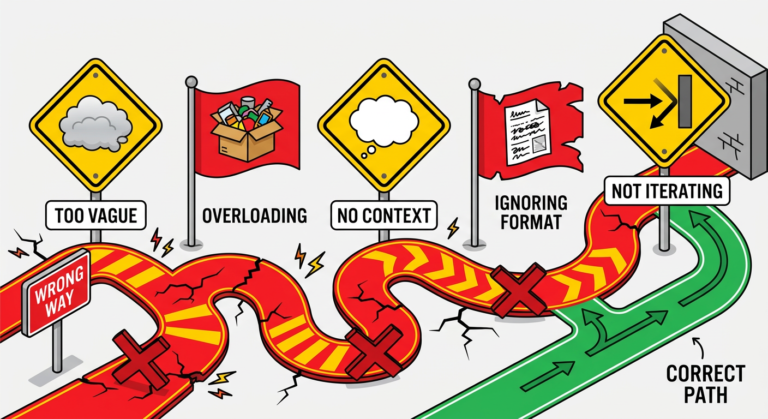
⚠️ Common ChatGPT Prompt Mistakes to Avoid {#common-mistakes}
Even great prompts can fail if you make these common errors. Here’s what to watch out for:
Mistake #1: Being Too Vague
❌ Wrong: “Help me with marketing.”
✅ Right: “Create a 30-day Instagram content plan for a vegan bakery targeting health-conscious millennials in Austin, TX.”
The Fix: Always specify the WHAT, WHO, WHERE, WHEN, and HOW.
Mistake #2: Overloading a Single Prompt
❌ Wrong: Cramming 15 different requests into one massive prompt.
✅ Right: Break complex tasks into 2-3 sequential prompts.
The Fix: One major task per prompt. Use follow-up prompts for refinement.
Mistake #3: Not Providing Context
❌ Wrong: “Write a product description.”
✅ Right: “Write a product description for [specific product] with [specific features] targeting [specific audience] in our brand voice which is [describe voice]. Here’s an example of our existing copy: [paste example].”
The Fix: Context is fuel. The more relevant information you provide, the better the output.
Mistake #4: Ignoring Output Format
❌ Wrong: Hoping ChatGPT guesses the format you want.
✅ Right: Explicitly state: “Format as a numbered list,” “Present in a table,” “Use H2 and H3 headings,” “Write as bullet points.”
The Fix: Always specify the exact format, structure, and organization you need.
Mistake #5: Not Iterating
❌ Wrong: Accepting the first output and being disappointed.
✅ Right: Using follow-up prompts like “Make it more conversational,” “Add more specific examples,” “Cut the length by 30%.”
The Fix: Treat ChatGPT like a collaborative partner, not a vending machine. The magic happens in the back-and-forth.
FAQ — Best ChatGPT Prompts {#faq}
Final Thoughts: Start Using These Prompts Today
You now have the 100 best ChatGPT prompts for virtually every situation you’ll encounter in work, business, writing, marketing, coding, education, creative projects, and personal life.
But here’s the real secret: the prompt is just the beginning.
The people who get the most value from AI aren’t the ones who copy-paste one prompt and walk away. They’re the ones who:
- Start with a great prompt (you now have 100 of them)
- Iterate and refine the output through conversation
- Add their own expertise and judgment to the result
- Build a personal prompt library for their recurring tasks
- Keep learning as AI capabilities evolve
Your Next Steps:
- 📌 Bookmark this page — you’ll come back to it constantly
- 📋 Copy your top 10 prompts into a personal swipe file
- 🧪 Test 3 prompts today — don’t just read, DO
- 📤 Share this guide with a colleague or friend who uses ChatGPT
- 📧 Subscribe to AI Spartan for weekly AI tips, tools, and prompt updates
The AI revolution isn’t coming. It’s here. The question isn’t whether you’ll use AI — it’s whether you’ll use it well.
These 100 prompts are your unfair advantage. Use them wisely.